Special Therapeutic Treatments for Autism & ADHD Children
Compassionate, evidence-based care designed specifically for Canadian children and families. Personalized programs that help every child thrive at home, school, and in the community.
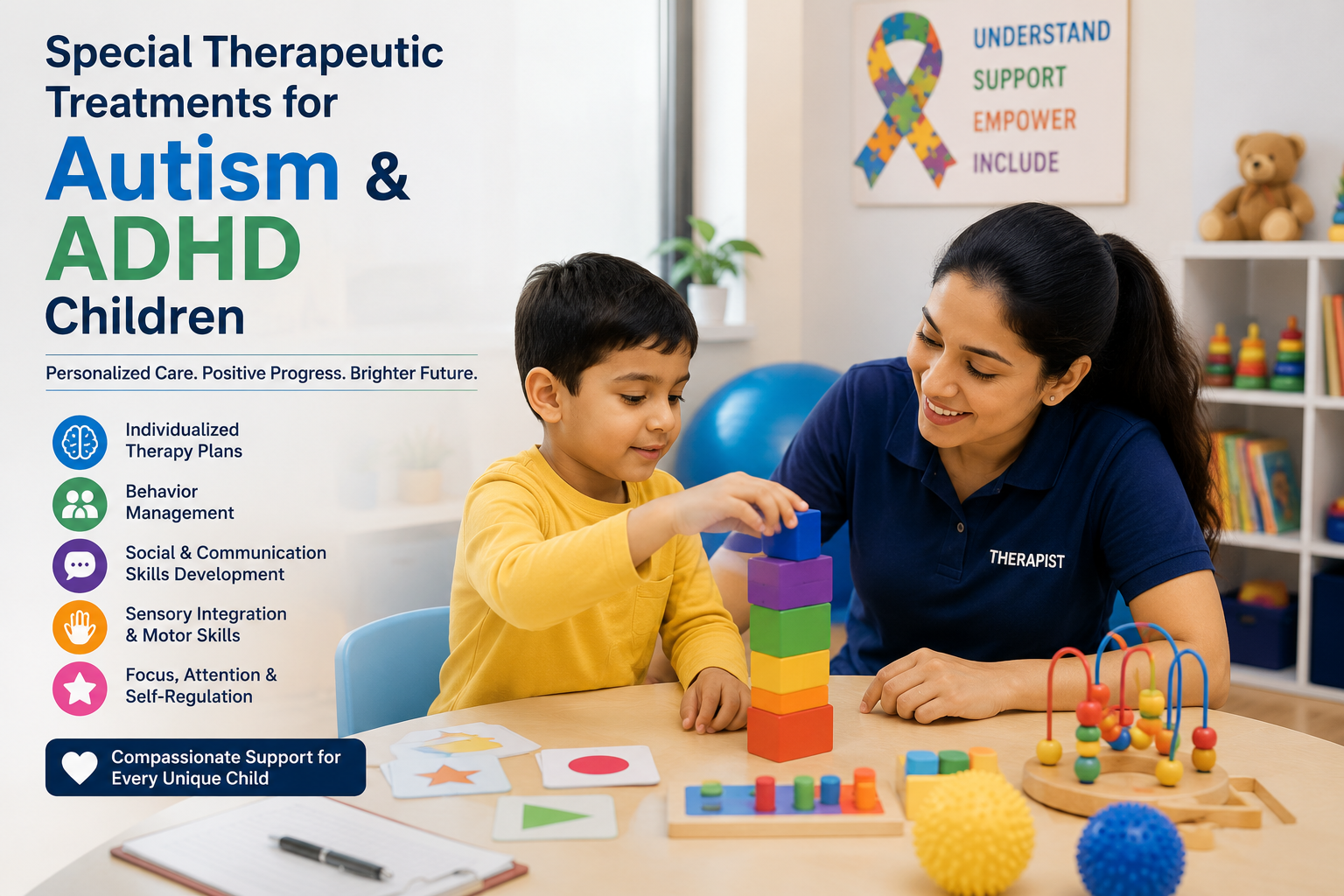
Special Therapeutic Treatments for Autism & ADHD Children in Canada
At Infinity Rehabilitation Centre, we specialize in delivering transformative Special Therapeutic Treatments for Autism & ADHD Children. Our programs are thoughtfully designed to meet the unique needs of Canadian families navigating provincial healthcare systems, school support programs, and the everyday realities of raising neurodivergent children.
Why Canadian Families Choose Our Special Therapeutic Treatments
Canada’s vast geography and diverse provincial funding models create unique challenges for families seeking quality autism and ADHD care. From the Ontario Autism Program (OAP) and Alberta’s FSCD funding to British Columbia’s Autism Funding and Quebec’s CLSC services, navigating support can feel overwhelming.
Our Special Therapeutic Treatments for Autism & ADHD Children are built with these Canadian realities in mind. We offer both in-person therapy at our modern Toronto-area centre and secure, high-quality virtual sessions that reach families in rural Saskatchewan, remote Nunavut, and everywhere in between.
🇨🇦 Coast-to-Coast Access
We proudly support families in all ten provinces and three territories through a hybrid model that combines the warmth of in-person care with the convenience of virtual therapy.
Culturally Responsive Care
Our team is trained in culturally safe practices that respect Indigenous, newcomer, and multicultural Canadian families. We honour your values, language, and traditions.
Funding Navigation Experts
Our dedicated intake team helps you maximize provincial funding, private insurance, and charitable grants so cost never becomes a barrier to your child receiving excellent care.
Our Evidence-Based Special Therapeutic Treatments for Autism & ADHD Children
Every program is delivered by licensed Canadian professionals and tailored to your child’s unique profile, strengths, and family goals.
1. Applied Behavior Analysis (ABA) Therapy
Applied Behavior Analysis is one of the most researched and effective Special Therapeutic Treatments for Autism & ADHD Children. Our Board Certified Behavior Analysts create highly individualized programs that target communication, social skills, academic readiness, daily living skills, and reduction of challenging behaviors.
At Infinity Rehabilitation Centre, we use naturalistic teaching strategies and play-based ABA that feel enjoyable for children rather than clinical. We place strong emphasis on parent training so families can confidently support skill development during everyday routines at home and in the community.
Canadian families particularly value our school collaboration program. We work directly with teachers and educational assistants across Ontario, Alberta, and British Columbia school boards to ensure therapy goals are reinforced throughout the school day. Most children show measurable gains in functional communication within the first 3–6 months of consistent programming.
Begin ABA Assessment →2. Speech-Language Therapy for Autism & ADHD
Communication is foundational to every aspect of a child’s development. Our registered speech-language pathologists specialize in both verbal and non-verbal communication strategies. For children with autism, we implement augmentative and alternative communication (AAC) systems including PECS, Proloquo2Go, and sign language when verbal speech is delayed.
Children with ADHD often struggle with pragmatic language skills — understanding tone, body language, sarcasm, and conversational turn-taking. Our therapists use engaging, play-based activities that make learning social communication fun and memorable.
We maintain strong partnerships with Canadian school boards and provide direct training to educators so language goals are supported throughout the school day. Parents consistently report dramatic improvements in their child’s ability to express needs, build friendships, and participate in classroom activities after 8–12 weeks of therapy.
3. Occupational Therapy & Sensory Integration
Many children with autism and ADHD experience sensory processing differences that significantly impact daily functioning, learning, and emotional regulation. Our occupational therapists are certified in Sensory Integration Therapy and create personalized “sensory diets” that help children feel calm, organized, and ready to learn.
Our state-of-the-art sensory gym features suspended equipment, a climbing wall, deep-pressure tools, and multiple regulation zones. We address fine motor skills, handwriting, self-care routines, and classroom participation. Parents frequently report remarkable improvements in sleep quality, eating habits, and emotional regulation within the first two months of consistent therapy.
We also provide comprehensive home and school environmental assessments so sensory supports can be implemented across all settings where your child spends time.
4. Cognitive Behavioral Therapy (CBT) for ADHD & Autism
Our specialized CBT programs help children develop executive functioning skills, emotional regulation strategies, and flexible thinking patterns. We use visual supports, social stories, and concrete examples that work exceptionally well for neurodivergent brains.
Children learn practical, age-appropriate strategies for managing impulsivity, improving focus, handling frustration, and building emotional resilience. We also address co-occurring anxiety, which is extremely common in both autism and ADHD.
Parent coaching is integrated into every CBT program. We teach families how to use CBT language and strategies at home and school, creating consistency that dramatically accelerates progress. Many children show significant reduction in anxiety symptoms and improvement in emotional control within 10–14 sessions.
5. Social Skills Training & Friendship Groups
Building meaningful friendships is one of the greatest challenges for children with autism and ADHD. Our small-group social skills programs are carefully structured and facilitated by experienced therapists using evidence-based curricula including PEERS® and Social Thinking®.
Children practice conversation skills, perspective-taking, conflict resolution, understanding unwritten social rules, and developing genuine friendships. Groups are thoughtfully matched by age and developmental level. Many Canadian parents tell us that the friendships formed in these groups become lasting sources of support and joy for their children.
We also run seasonal social camps during school breaks that combine fun activities with targeted social learning in a relaxed, camp-like environment.
6. Music, Art & Play Therapy
Creative therapies provide powerful outlets for emotional expression and self-regulation. Our registered music therapists and art therapists use rhythm, melody, drawing, painting, and clay work to help children process feelings they may not yet have words for.
Play therapy allows younger children to work through challenges in a natural, joyful way. Our therapists are trained in both directive and non-directive approaches, always following the child’s lead while gently guiding toward therapeutic goals.
These therapies are especially effective for children who find traditional talk-based sessions difficult. Many families report that music and art therapy became their child’s favorite part of the week and a vital tool for emotional regulation at home.
7. Neurofeedback & Brain-Based Training
Infinity Rehabilitation Centre offers qEEG-guided neurofeedback — one of the most advanced brain-training technologies available in Canada. This non-invasive treatment helps children improve attention, reduce anxiety, and enhance emotional self-regulation by training specific brainwave patterns.
Many families seeking medication-free options for ADHD find neurofeedback particularly beneficial. We combine it with behavioral strategies for lasting results. Our clinicians are certified by the Biofeedback Certification International Alliance (BCIA).
Neurofeedback is especially helpful for children who have difficulty with traditional therapy due to attention or sensory challenges.
8. Family-Centered Parent Coaching & Sibling Support
We strongly believe that parents are the most important therapists in a child’s life. Our comprehensive parent coaching program teaches practical, easy-to-implement strategies that can be used during daily routines — mealtimes, bedtime, homework, and community outings.
We also offer sibling support groups because brothers and sisters of children with autism or ADHD often need their own space to express feelings and learn how to be supportive while taking care of their own emotional wellbeing.
Canadian families particularly value our monthly virtual parent support circles that connect families across provinces, reducing the isolation many parents feel.
Special Therapeutic Treatments Across Canada
We understand that each province has different funding structures, wait times, and school support systems. Our team is deeply familiar with the Ontario Autism Program, Alberta FSCD, BC Autism Funding, Manitoba’s Children’s Special Services, and programs in Atlantic Canada and the Territories.
Whether you live in a major city or a remote northern community, we provide flexible scheduling, travel support for in-person intensives, and robust virtual therapy options that maintain the same high quality as our centre-based programs.
Stories from Canadian Families
“Our 7-year-old son from Mississauga was non-verbal with severe meltdowns. After 9 months of ABA and speech therapy at Infinity, he now uses full sentences and attends Grade 2 with minimal support. The difference in our family life is indescribable.”
— Priya & Raj Patel, Ontario“My daughter with ADHD in Vancouver struggled terribly with friendships and emotional outbursts. The social skills group and CBT program gave her tools she still uses daily. She now has two best friends and her confidence has soared.”
— Michael Thompson, British Columbia“We drive from Calgary every two weeks for occupational therapy and neurofeedback. The sensory integration work has completely transformed our son’s ability to sit in class and regulate his emotions. Worth every kilometer.”
— Fatima & Omar Al-Hassan, Alberta