BARNALA,PUNJAB,INDIA
COGNITIVE
BEHAVIORAL
THERAPY
The Science of Changing How We Think, Feel & Act
A comprehensive, evidence-based exploration of CBT — from its revolutionary theoretical origins to its modern applications across the full spectrum of mental health conditions.
Contents
- 1.Introduction
- 2.The CBT Model
- 3.Core CBT Techniques
- 4.CBT for Anxiety
- 5.CBT for OCD & PTSD
- 6.Neuroscience of CBT
- 7.History & Origins
- 8.History & Origins
- 9.The CBT Process
- 10. CBT for Depression
- 11. Third-Wave CBT
- 12. Conclusion
Introduction: Mental Health and the People of Barnala
Barnala is a proud district in the heart of Punjab — a city whose identity is woven from the threads of agriculture, hard work, community solidarity, and a deep cultural attachment to family and tradition. The people of Barnala are known for their resilience, their warmth, and their strong sense of belonging. And yet, like communities across India and the world, Barnala is not immune to the profound and growing challenge of mental health. Depression, anxiety, stress, trauma, relationship difficulties, and substance use affect people in Barnala just as they affect people everywhere — quietly, often invisibly, and frequently without adequate professional support.
Mental health in Punjab carries a particular weight that extends beyond individual suffering. The agricultural crisis, with its devastating impact on farming families across the state, has produced levels of stress, debt-related anxiety, and despair that have affected entire communities in districts like Barnala. The pressures of economic uncertainty, educational competition, family expectations, gender role constraints, and — for many young people — the disorientation of rapid social change create a complex landscape of psychological need that demands serious, evidence-based attention.
At the same time, access to quality mental healthcare in Barnala and across the wider district remains limited. Awareness of psychological treatments is growing, but many residents remain unfamiliar with what effective, evidence-based therapy actually looks like — or may hold reservations about seeking help due to concerns about stigma, cost, or uncertainty about what therapy involves. This guide is written for those people: for the residents of Barnala who are navigating mental health challenges, for families trying to support a loved one, for teachers and community workers who encounter psychological distress in their daily work, and for anyone in Barnala who simply wants to understand what Cognitive Behavioral Therapy is and whether it might help them or someone they care about.
Cognitive Behavioral Therapy — or CBT — is the most extensively researched and widely recommended psychological treatment in the world. It is practical, skills-based, time-limited, and proven effective for the conditions most commonly affecting people in communities like Barnala. This guide provides a complete, accessible account of CBT: its nature, its methods, its applications, and how to access it in Barnala and the surrounding region.

The voice is the mirror of the soul — when it breaks, we do not simply fix a sound. We restore a person's ability to be heard, understood, and fully present in the world.
Contact Granuloma
Voice Therapy Services Offered in Barnala
Our VoiceCraft centre in Barnala offers a comprehensive suite of evidence-based voice therapy services for children, adolescents, and adults across all professional and personal vocal profiles.

Resonant Voice Therapy
The gold-standard technique for voice disorders — teaching effortless, forward-focused voice production that maximises vocal power with minimal cord tension.

Laryngeal Massage Therapy
Manual therapy to release excessive muscular tension in the larynx and surrounding structures — primary treatment for muscle tension dysphonia.

Breath Support Training
Diaphragmatic breathing and respiratory support exercises to give the voice a powerful, efficient breath foundation for sustained, projected speech and singing.

Singing Voice Therapy
Specialised therapy for professional and amateur singers in Barnala — treating vocal injuries, building technique, extending range, and preventing future damage.

Teacher Voice Program
A dedicated program for Barnala's educators — combining voice therapy, classroom projection techniques, and vocal hygiene to protect teaching voices long-term.

Post-Surgical Rehab
Comprehensive voice rehabilitation following phonomicrosurgery, thyroidectomy, or other procedures affecting the larynx — restoring voice quality and preventing scar formation.
Neurological Voice Rehab
LSVT LOUD and other evidence-based voice rehabilitation for Parkinson's disease, stroke, and other neurological conditions affecting voice loudness and quality.

Online Voice Therapy
High-quality teletherapy voice sessions for patients across Punjab who cannot attend our Barnala clinic — equally effective for many voice conditions.
The CBT Model
The CBT Model: Thoughts, Feelings, and Behaviour
The foundation of Cognitive Behavioral Therapy is a model that maps the relationship between three interconnected elements of psychological experience: thoughts (cognitions), emotions (feelings), and behaviours (actions). This model — sometimes represented as a triangle with each element influencing the other two — explains both how psychological distress develops and how it can be relieved through targeted intervention.
Consider a scenario familiar to many in Barnala: a young man preparing for a competitive examination is told by a relative at a family gathering that he "doesn't seem to be studying enough." His thought in response might be: "They're right. I'm going to fail. I'll disgrace my family." This thought produces an emotion — acute anxiety and shame — which in turn drives a behaviour: avoiding study because the anxiety associated with opening books has become overwhelming. The avoidance then reinforces the original thought ("I really am failing"), completing a vicious cycle that CBT is specifically designed to interrupt.
The same situation, interpreted differently, would produce entirely different emotional and behavioural consequences. If the same young man thought "That's one person's opinion. I know how hard I'm working. Let me focus on my plan," his emotional response would be more measured and his behaviour more adaptive. CBT does not deny the reality of difficult circumstances — it does not offer false reassurance or forced positivity. What it teaches is the skill of examining the accuracy and helpfulness of our interpretations, and choosing responses that serve our wellbeing and our goals.

Thoughts (Cognitions)
Automatic thoughts, deeper beliefs, and core schemas that interpret events. CBT makes these visible and testable.

Emotions (Feelings)
The emotional responses — anxiety, sadness, anger, shame — that arise from our interpretations of events.
Behaviours (Actions)
What we do in response to thoughts and feelings — including avoidance, withdrawal, and safety behaviours that maintain problems.

The Vicious Cycle
Unhelpful thoughts, feelings, and behaviours reinforce each other in self-sustaining loops. CBT targets and breaks these cycles.
"ਸਾਡੇ ਮਨ ਦੀ ਸੋਚ ਸਾਡੇ ਜੀਵਨ ਨੂੰ ਬਣਾਉਂਦੀ ਹੈ — Our thoughts shape our lives. Cognitive Behavioral Therapy gives us the tools to shape our thoughts."— Adapted from Aaron T. Beck's core CBT principle, for the Punjab community
Conditions Treated
Conditions Treated with CBT in Barnala and Punjab
CBT is one of the most versatile psychological interventions available, with clinical evidence supporting its use across a wide range of mental health conditions. The following table summarises the conditions most commonly addressed through CBT in Barnala and the surrounding region, along with the strength of evidence and typical treatment approach.
Condition
How CBT Helps
Evidence
Depression (Udaasi)
Behavioural activation, cognitive restructuring of negative triad — self, world, future
Gold Standard
Generalised Anxiety (Chinta)
Worry postponement, cognitive restructuring, relaxation training, behavioural experiments
Strong Evidence
Panic Disorder
Psychoeducation, interoceptive exposure, challenging catastrophic body misinterpretations
Gold Standard
Social Anxiety (Sharmindagi)
Attention retraining, exposure, video feedback, dropping safety behaviours
Strong Evidence
OCD
Cognitive appraisal work, Exposure and Response Prevention (ERP)
Gold Standard
PTSD / Trauma
Trauma-Focused CBT, Cognitive Processing Therapy, Prolonged Exposure
Gold Standard
Substance Use (Nesha)
Trigger identification, craving management, relapse prevention planning
Good Evidence
Anger and Aggression
Cognitive restructuring, arousal management, communication skills training
Good Evidence
Insomnia (Neend ki Takleef)
CBT-I protocol: sleep restriction, stimulus control, sleep hygiene education
Gold Standard
Academic & Exam Stress
Performance anxiety management, perfectionism work, study behaviour activation
Good Evidence
In Barnala specifically, practitioners report that the most commonly presenting conditions include depression linked to agricultural and economic stress, anxiety among students and youth, substance use disorders (particularly alcohol and pharmaceutical drugs), family conflict-related distress, and trauma responses among those who have experienced bereavement or financial crisis. All of these conditions have a strong evidence base for CBT intervention, and local therapists are increasingly skilled in delivering culturally adapted versions of these protocols.
What Is CBT?
What Is Cognitive Behavioral Therapy?
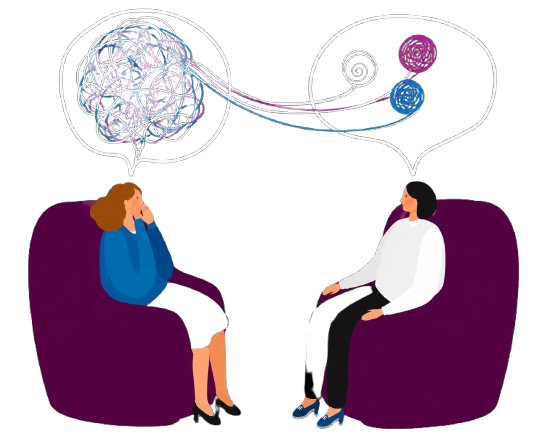
Cognitive Behavioral Therapy — widely known by its initials CBT — is a structured, practical, evidence-based form of psychotherapy that focuses on the relationship between thoughts, feelings, and behaviours. The central insight of CBT is both simple and profoundly powerful: the way we think about a situation shapes how we feel about it, and how we feel shapes what we do. When our thinking is distorted, biased, or consistently negative, our emotional experience and our behaviour suffer accordingly. By identifying, examining, and changing these unhelpful patterns of thought and behaviour, we can make meaningful, lasting improvements to our mental and emotional wellbeing.
CBT is not simply a conversation about problems. It is an active, skills-based approach that teaches clients specific strategies — tools they can learn, practise, and apply independently in their own lives. Sessions are structured and purposeful. Between sessions, clients complete agreed tasks and exercises that build their skills in real-world settings. CBT is typically time-limited: unlike older forms of psychotherapy that might continue indefinitely, CBT usually achieves its goals within 8 to 20 sessions, making it a practical and accessible option for people with busy lives and real-world demands.
For residents of Barnala, CBT offers particular advantages. It is culturally adaptable — skilled therapists work within the client's own value system, family structure, and cultural context rather than imposing a Western psychological framework. It is collaborative and respectful — the therapist and client work as a team, with the client's goals and priorities driving the direction of work. And it is empowering — by building genuine skills rather than simply providing insight or support, CBT gives people tools they can use long after therapy has ended.
CBT is increasingly available in Barnala through private psychological clinics, government mental health facilities, and NGO-supported community programmes. Bilingual therapists offering sessions in Punjabi and Hindi are available, making the therapy accessible to Barnala residents in their own language.
Cognitive Distortions
Cognitive Distortions: Common Thinking Errors in Daily Life
One of CBT's most clinically useful contributions is the identification and naming of cognitive distortions — systematic patterns of biased, inaccurate, or unhelpful thinking that generate and sustain emotional distress. These are not signs of weakness or stupidity; they are universal features of the human mind under stress, present in people of every culture, background, and education level. In Barnala — as everywhere — these patterns show up in the anxious thoughts of students, the self-criticism of parents, the catastrophic thinking of those facing financial pressures, and the hopeless thinking of those experiencing depression.
CIn the cultural context of Barnala and Punjab, certain cognitive distortions have particular prevalence and power. The "should statements" linked to family honour, gender role expectations, and duty to elders ("I should sacrifice everything for my family"; "A man should never show weakness") can become tyrannical internal voices that prevent people from seeking help, setting healthy boundaries, or acknowledging their own needs. CBT examines these beliefs with the same respectful curiosity it brings to all automatic thoughts — not dismissing cultural values, but helping individuals distinguish between genuine values and distorted, rigid beliefs that cause disproportionate suffering.
For residents of Barnala, CBT offers particular advantages. It is culturally adaptable — skilled therapists work within the client's own value system, family structure, and cultural context rather than imposing a Western psychological framework. It is collaborative and respectful — the therapist and client work as a team, with the client's goals and priorities driving the direction of work. And it is empowering — by building genuine skills rather than simply providing insight or support, CBT gives people tools they can use long after therapy has ended.
CBT is increasingly available in Barnala through private psychological clinics, government mental health facilities, and NGO-supported community programmes. Bilingual therapists offering sessions in Punjabi and Hindi are available, making the therapy accessible to Barnala residents in their own language.
Stigma & Community
Addressing Mental Health Stigma in Barnala and Punjab
Mental health stigma remains one of the most significant barriers to accessing psychological care in Barnala and across Punjab. The deeply embedded cultural belief that psychological difficulties reflect personal weakness, family shame, or spiritual deficiency — "Paagalpan" in common parlance — prevents many individuals from seeking help until their distress has become severe and their functioning significantly impaired. This delay causes unnecessary suffering and makes eventual treatment more challenging.
It is important to address this stigma directly and honestly. Mental health conditions are not signs of weakness, poor character, or inadequate faith. They are health conditions — complex interactions of biological, psychological, social, and circumstantial factors — just as kidney disease, diabetes, or a broken bone are health conditions. No one chooses to experience depression or anxiety, and no amount of willpower, prayer, or social pressure reliably resolves clinical mental health difficulties without appropriate support. Seeking professional help for a mental health condition is precisely as rational and courageous as seeing a doctor for a physical one.
Cognitive Behavioral Therapy has a particular advantage in stigma-sensitive communities because of its practical, skills-focused, and non-pathologising frame. Many clients in Barnala are more comfortable engaging with CBT when it is framed as skill-building — learning to manage stress, think more clearly, and respond more effectively to life's challenges — rather than as "mental illness treatment." This framing is not dishonest; it reflects a genuine truth about what CBT is. And it opens a door for individuals who would never have entered a conventional psychiatric clinic.
History & Context
History of CBT and Its Relevance to Punjab
Cognitive Behavioral Therapy was developed primarily in the United States in the 1960s and 1970s, largely through the groundbreaking work of psychiatrist Dr Aaron T. Beck at the University of Pennsylvania. Working with patients suffering from depression, Beck observed that they were tormented not only by their circumstances but by a constant stream of spontaneous, highly negative thoughts about themselves, their world, and their future. He called these automatic thoughts, and he developed structured methods to help patients identify and challenge them. His 1979 book, Cognitive Therapy of Depression, became one of the most influential publications in the history of mental health.
Cognitive Behavioral Therapy — widely known by its initials CBT — is a structured, practical, evidence-based form of psychotherapy that focuses on the relationship between thoughts, feelings, and behaviours. The central insight of CBT is both simple and profoundly powerful: the way we think about a situation shapes how we feel about it, and how we feel shapes what we do. When our thinking is distorted, biased, or consistently negative, our emotional experience and our behaviour suffer accordingly. By identifying, examining, and changing these unhelpful patterns of thought and behaviour, we can make meaningful, lasting improvements to our mental and emotional wellbeing.
In the decades that followed, CBT was rigorously tested in hundreds of clinical trials across the world and found effective for anxiety disorders, obsessive-compulsive disorder, post-traumatic stress disorder, eating disorders, insomnia, chronic pain, and many other conditions. Today, it is recommended as a first-line psychological treatment by health authorities in the United Kingdom, the United States, Australia, and — increasingly — India, where the National Mental Health Policy of India (2014) and the Mental Healthcare Act (2017) have emphasised the importance of evidence-based psychological interventions.
CBT's Growing Presence in Punjab
Within Punjab specifically, the need for evidence-based psychological intervention has never been more acute. The state has faced well-documented mental health challenges related to the farm crisis, substance use, family breakdown, and the psychological pressures on young people navigating competitive education and employment. Government hospitals in Punjab, district mental health programmes, and a growing number of private practitioners are increasingly incorporating CBT into their services. In Barnala, awareness of evidence-based psychological therapies is growing, and a small but dedicated community of trained therapists is working to make CBT accessible to local residents across the socioeconomic spectrum.
ਸਾਡੇ ਮਨ ਦੀ ਸੋਚ ਸਾਡੇ ਜੀਵਨ ਨੂੰ ਬਣਾਉਂਦੀ ਹੈ — Our thoughts shape our lives. Cognitive Behavioral Therapy gives us the tools to shape our thoughts."— Adapted from Aaron T. Beck's core CBT principle, for the Punjab community
CBT Techniques
Core CBT Techniques Used by Therapists in Barnala
CBT in Barnala and across Punjab is delivered through a range of specific, evidence-based techniques that therapists tailor to each individual client's needs, cultural background, and treatment goals. The following are the most widely used and clinically effective techniques in current CBT practice.
Thought Records (Soch ka Record)
The thought record is the foundational tool of cognitive CBT. Clients learn to notice and write down automatic thoughts as they arise — recording the triggering situation, the emotion experienced, the intensity of that emotion, and the automatic thought itself. They then systematically evaluate the thought: What is the evidence for and against it? What would a trusted friend say? What is a more balanced, realistic way to see this? This process of structured written self-examination builds the habit of cognitive flexibility that is at the heart of CBT's lasting benefits.
Behavioural Activation (Kaam mein Wapsi)
Particularly important for depression, behavioural activation involves identifying and scheduling meaningful activities — activities that previously brought pleasure, a sense of achievement, or social connection — even when motivation is low. In Barnala's context, this might mean re-engaging with religious practice, attending a community event, or returning to farming tasks that have been avoided. Acting in accordance with values rather than waiting for mood to lift breaks the depression-withdrawal-isolation cycle.
Exposure Therapy (Darr ka Saamna)
For anxiety-driven avoidance, exposure involves systematically and gradually facing feared situations — from the least to the most frightening — without retreating to avoidance or safety behaviours. This process, supported by the therapist, allows the nervous system to learn through direct experience that the feared outcome does not occur, or that the anxiety itself, while uncomfortable, is tolerable and temporary.
Socratic Questioning (Savaalon se Sochna)
The CBT therapist uses carefully crafted questions — not telling the client what to think, but helping them examine their own thinking from new angles. "What is the evidence for this belief?" "How would you advise a close friend who thought this way?" "What is the most realistic outcome?" This guided discovery process helps clients reach new perspectives through their own reasoning, producing more durable change than being told what to think.
Behavioural Experiments (Tajurba karke Dekhna)
Behavioural experiments are planned real-world activities designed to test whether a specific negative belief is accurate. A person who believes "If I ask for help, people will think less of me" might deliberately ask a colleague or neighbour for a small favour and observe what actually happens. The results typically disconfirm the feared outcome, providing direct experiential evidence that no amount of in-session discussion can replicate.
Relaxation and Breathing Techniques (Sukoon ke Tarike)
Diaphragmatic breathing, progressive muscle relaxation, and grounding techniques help manage the physical symptoms of anxiety and panic. These are taught early in CBT as immediate coping tools that reduce physiological arousal and make engagement with other CBT work more accessible. In sessions delivered in Barnala, therapists often integrate these techniques with guidance that resonates with familiar spiritual and yogic practices.
Problem-Solving Therapy (Masle ka Hal)
When real, practical problems — financial stress, family conflict, workplace difficulties — are contributing to distress, CBT incorporates structured problem-solving: defining the problem clearly, generating a range of possible solutions, evaluating each option, and systematically implementing and reviewing the chosen approach. This empowers clients with a replicable framework for navigating life's challenges effectively and with confidence.
What to Expect
The CBT Process — What to Expect When You Begin Therapy in Barnala
One of the most common barriers to seeking psychological help in Barnala — as in much of India — is simply not knowing what to expect. Many people imagine therapy as an intimidating process of revealing private secrets to a stranger, or fear being judged, medicated, or labelled. CBT is none of these things. The following outline describes what a typical course of CBT looks like from beginning to end.
CBT in Barnala and across Punjab is delivered through a range of specific, evidence-based techniques that therapists tailor to each individual client's needs, cultural background, and treatment goals. The following are the most widely used and clinically effective techniques in current CBT practice.
Initial Assessment (Pahli Mulakat)
The first session is primarily an assessment — the therapist listens carefully to your concerns, asks questions about your history, daily life, symptoms, and goals, and begins to understand your situation in its full context. There is no pressure to share anything you are not ready to share. The therapist may use standardised questionnaires to measure your current level of distress. A treatment plan is developed collaboratively with you.
Psychoeducation and Goal Setting (Jaankari aur Lakshya)
In the early sessions, the therapist explains the CBT model and how it applies to your specific difficulties — helping you understand why you feel and behave as you do. Specific, achievable goals are set together. This phase typically helps clients feel less alone with their difficulties and more hopeful that change is possible.
Skill-Building Sessions (Kaushal Sikhna)
The main body of therapy involves learning and practising CBT skills — thought records, behavioural activation, exposure, relaxation, problem-solving. Each session has a clear agenda and builds on the last. Between sessions, you complete agreed homework tasks that apply skills in your own daily life. These between-session tasks are where most of the real change happens.
Review and Deepening (Agey Badna)
As therapy progresses, the work often deepens — exploring the underlying beliefs and assumptions that drive automatic thoughts, and working to restructure these at a more fundamental level. Progress is regularly reviewed against the goals set at the beginning, and the treatment plan is updated as needed.
Relapse Prevention and Completion (Tayyar Rehna)
As therapy approaches its end, sessions focus on consolidating gains, identifying personal warning signs of future difficulties, and building a personalised written plan for maintaining progress independently. CBT aims to make you your own therapist — equipped with skills that will serve you for the rest of your life.
Finding a Therapist
Finding a CBT Therapist in Barnala
Accessing qualified CBT in Barnala requires some navigation, but the landscape of mental health services is growing and improving. The following guide outlines the main avenues through which Barnala residents can access CBT and what to look for in a qualified practitioner.
Government District Hospital, Barnala
The District Hospital provides psychiatric outpatient services and may refer to or offer counselling/CBT support. The District Mental Health Programme (DMHP) under the National Mental Health Programme operates in Barnala district and is a key access point for free psychological services.
Private Psychological Clinics — Barnala City
A growing number of private clinical psychologists and counsellors in Barnala offer CBT. Look for practitioners registered with the Rehabilitation Council of India (RCI) with qualifications in Clinical Psychology (M.Phil. or Ph.D. in Clinical Psychology from a recognised institution).
Nearby Medical Colleges — Faridkot, Patiala, Ludhiana
Government Medical College Patiala (GMCH), Christian Medical College Ludhiana, and Guru Gobind Singh Medical College Faridkot all have well-resourced psychiatric and psychological services accessible to Barnala residents. PGIMER Chandigarh (approximately 130 km) provides the most comprehensive specialist services in the region.
Community outreach in Barnala: Our voice therapy centre conducts regular free voice screening camps in Barnala for teachers, religious performers, and professional voice users — identifying vocal pathology early and ensuring prompt referral and treatment. If you represent a school, gurdwara, or professional organisation in Barnala interested in voice screening, contact us to discuss how we can bring voice health education to your community.
A Healthier Future for Barnala
If you or someone you love in Barnala is struggling, please reach
out. Help is available, it is effective, and seeking it is one
of the most courageous and loving things you can do.

