Sensory Integration
Therapy in Barnala
Expert sensory integration therapy at Infinity Rehabilitation Centre — helping children and adults in Barnala overcome sensory processing challenges with compassionate, evidence-based care.
"Best sensory therapy centre in Barnala. My son has shown remarkable improvement in 8 weeks."
— Mrs. Gurpreet Kaur, Barnala
Leading Provider of Sensory Integration Therapy in Barnala
At Infinity Rehabilitation Centre, we specialize in delivering transformative sensory integration therapy to children and adults across Barnala and surrounding areas of Punjab.
Welcome to Infinity Rehabilitation Centre — Barnala’s premier destination for advanced Sensory Integration Therapy. Located in the heart of Barnala, Punjab, our centre has become a beacon of hope for hundreds of families struggling with sensory processing challenges. We understand that every child and adult experiences the world differently. When sensory signals don’t get organized into appropriate responses, it can affect learning, behaviour, social interaction, and emotional regulation.
Our dedicated team of certified occupational therapists and sensory integration specialists has helped over 500 families in Barnala and nearby towns including Sangrur, Mansa, Bathinda, and Patiala. We combine the latest evidence-based techniques with a warm, child-centred approach that makes therapy sessions enjoyable and effective.
Whether your child is struggling with autism spectrum disorder, ADHD, sensory processing disorder (SPD), developmental delays, or learning difficulties, our customized sensory integration programs are designed to meet individual needs. We also support adults recovering from stroke, traumatic brain injury, or those living with anxiety and sensory sensitivities.
What is Sensory Integration Therapy?
Sensory Integration Therapy (SIT) is a specialized form of occupational therapy that helps the brain organize and interpret sensory information from the body and environment. Developed by Dr. A. Jean Ayres in the 1970s, this therapy has helped millions of children worldwide and is now widely recognized as one of the most effective interventions for sensory processing disorder.
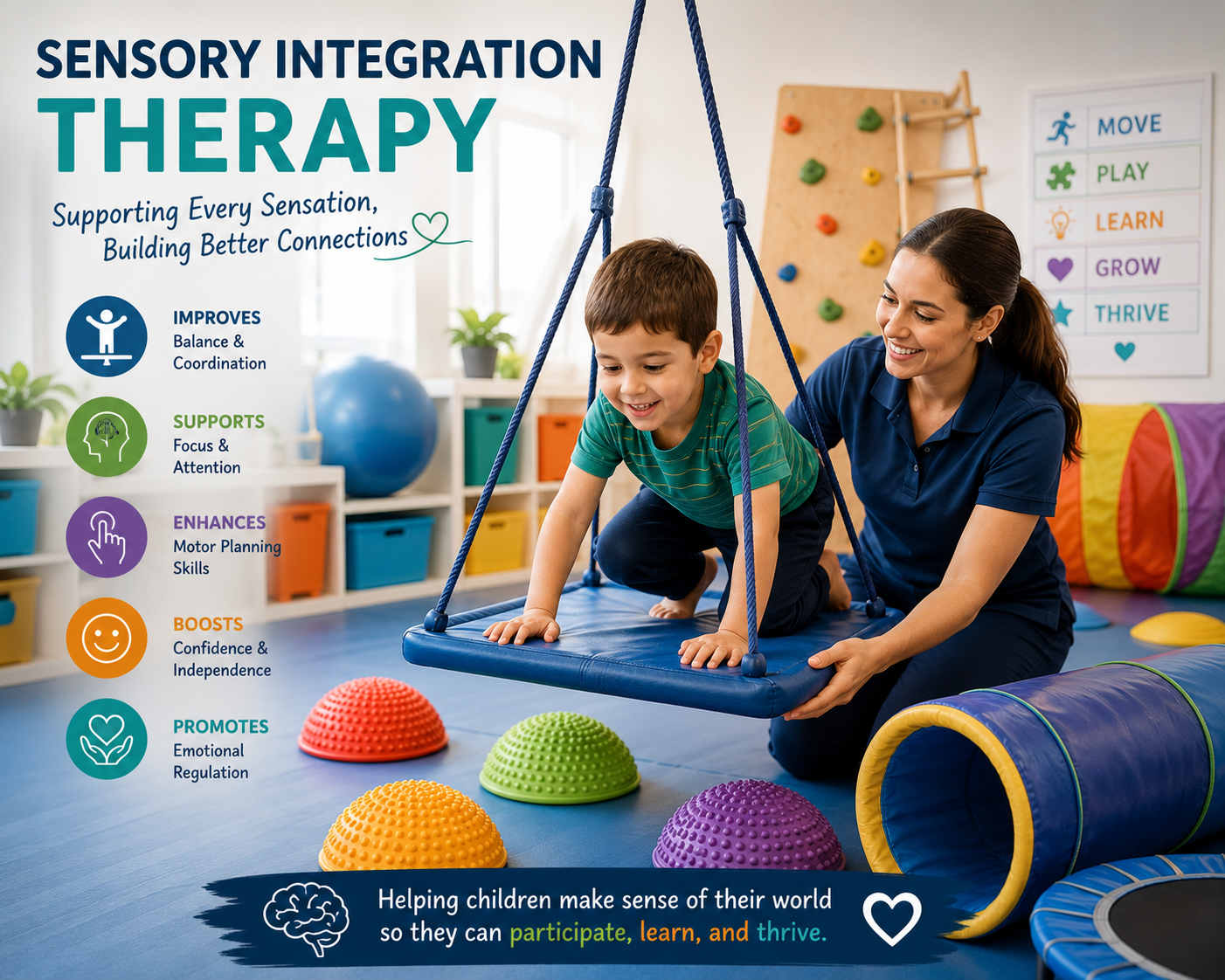
At infinityrehabilitationcentre in Barnala, our therapists create a sensory-rich environment using specialized equipment including suspended swings, therapy balls, tactile tables, balance beams, and proprioceptive tools. These activities are carefully designed to challenge the child’s sensory system in a fun, playful, and structured manner.
The goal is not to simply expose the child to more sensory input, but to help the brain make better sense of the information it receives. Over time, this leads to improved attention, better motor planning, enhanced emotional regulation, and greater participation in daily activities at home, school, and in the community.
Key Sensory Systems We Address
Proven Benefits of Sensory Integration Therapy
Families across Barnala have witnessed remarkable transformations in their children
Improved Focus & Attention
Children show significant improvement in classroom attention, reduced hyperactivity, and better task completion after 8–12 weeks of therapy.
Better Social Skills
Enhanced ability to interact with peers, improved eye contact, reduced sensory-related meltdowns in social situations.
Emotional Regulation
Children learn to self-regulate emotions, experience fewer tantrums, and handle transitions more smoothly at home and school.
Enhanced Motor Skills
Better balance, coordination, handwriting, and participation in sports and physical activities.
Academic Improvement
Improved reading, writing, and learning abilities as sensory systems become better organized.
Family Quality of Life
Reduced parental stress, better sleep patterns, and improved family dynamics reported by Barnala parents.
Who Benefits from Sensory Integration Therapy in Barnala?
Our programs are designed for children and adults facing a wide range of challenges
Children & Adolescents
- Autism Spectrum Disorder (ASD)
- Attention Deficit Hyperactivity Disorder (ADHD)
- Sensory Processing Disorder (SPD)
- Developmental Coordination Disorder
- Learning Disabilities & Dyslexia
- Speech & Language Delays
- Anxiety & Sensory Over-responsivity
Adults & Special Needs
- Post-Stroke Sensory Rehabilitation
- Traumatic Brain Injury Recovery
- Adult ADHD & Sensory Sensitivities
- Anxiety Disorders with Sensory Components
- Autism in Adulthood
- Workplace Sensory Accommodations
- Neurological Conditions
Our 6-Step Sensory Integration Process
A structured, personalized approach followed at Infinity Rehabilitation Centre Barnala
Comprehensive Sensory Assessment
Our therapists conduct detailed standardized assessments including the Sensory Integration and Praxis Tests (SIPT), clinical observations, and parent interviews to understand your child’s unique sensory profile.
Individualized Treatment Planning
We create a customized therapy plan targeting specific sensory challenges. Goals are set collaboratively with parents and teachers to ensure consistency across environments.
One-on-One Therapy Sessions
45–60 minute sessions conducted in our specially designed sensory gym featuring suspended equipment, deep pressure tools, and multi-sensory activities tailored to your child’s needs.
Home & School Program Integration
We provide detailed home programs and teacher consultation so that sensory strategies are consistently applied at home and in the classroom for maximum progress.
Regular Progress Monitoring
Weekly documentation and monthly reviews with parents to track progress and adjust goals. We celebrate every milestone achieved by your child.
Discharge Planning & Maintenance
Once goals are achieved, we provide a maintenance program and periodic check-ins to ensure long-term success and prevent regression.
Real Stories from Barnala Families
Hear from parents who trusted infinityrehabilitationcentre in Barnala
"My 6-year-old son was unable to tolerate any clothing tags or loud sounds. After 14 weeks of sensory integration therapy at Infinity Rehabilitation Centre, he now enjoys birthday parties and wears all kinds of clothes. The change is unbelievable."
"My daughter was diagnosed with SPD and was constantly crashing into furniture. The team at IRC Barnala helped her develop better body awareness. She now rides a bicycle confidently and her handwriting has improved tremendously."
"As a working mother, I was worried about my son’s future. The caring therapists at Infinity Rehabilitation Centre not only helped my child but also guided me on how to support him at home. I am forever grateful."
Why Barnala Families Choose
Infinity Rehabilitation Centre
Frequently Asked Questions
Most children at our Barnala centre show noticeable improvement within 8–12 weeks. However, the duration varies based on the severity of sensory challenges and consistency of sessions. We recommend a minimum of 3 months for lasting results.
Many health insurance policies now cover occupational therapy including sensory integration. Our team at Infinity Rehabilitation Centre assists families with documentation and insurance claims.
We provide sensory integration therapy for children as young as 18 months up to 18 years, as well as adults. Early intervention yields the best outcomes, but it is never too late to start.
Parents are welcome to observe sessions. We also conduct regular parent training sessions so you can continue sensory activities at home. This partnership is key to success.
Ready to Begin Your Child’s Transformation?
Join hundreds of happy families in Barnala who have experienced the life-changing benefits of Sensory Integration Therapy at Infinity Rehabilitation Centre.
Limited slots available for March 2026 • Morning & Evening Batches